
Ongoing Research

Here is a list of current studies/initiatives that Shepherd Center is participating in to help increase our understanding of Spinal Cord Injuries. These studies are not recruiting volunteers at the present time.    

Psychological status during inpatient rehabilitation and 1 year after onset: stress, coping, and expectation-hope for recovery  [408]

Principal Investigator: James Krause, PhD - Medical University of South Carolina (MUSC)


Study Description: This research is focused on evaluating psychological outcomes at 1 year following spinal cord injury with special attention to hope and expectation for recovery. Patients will be asked to answer questions about their life’s events, their feelings about those events, their social support, their coping methods and their personality traits. With this information it may be possible to better predict and prevent adverse psychological outcomes related to spinal cord injury. To participate in this study, you must:

  • Traumatic SCI admitted to Shepherd within 4 months of injury
  • Be over age 18 at time of enrollment
  • Patients with cognitive impairment will not be included

Contact: Email Pat Duncan, BS, or call 404-350-7591.


Evaluating the effects of an activity-based therapeutic exercise program for individuals with SCI - "ACTION Trial" [418]

Principal Investigator: Mike Jones, PhD

Study Description: The purpose of this study is to evaluate the effects from participation in an intensive, activity-based therapy program for individuals with chronic, motor incomplete spinal cord injuries (SCI). Participants will complete 24 weeks of activity based therapy (9 hours/week) beginning with a graduated treatment protocol determined by the subject’s physical exam at the time of entry into the study. The protocol includes robotic and manual locomotor training, over ground gait training, intensive resistance and plyometric training, and development sequencing. Many of these interventions will also incorporate electrical stimulation when appropriate. Each participant will be evaluated and allocated to a specific treatment protocol based on initial walking independence, spasticity and trunk stability. (BT Grant study)

Contact: Email Nicholas Evans, MHSc, ACSM-HFS, or call 404-350-7788.


SCIREHAB – Improving outcomes through practice-based evidence  [421]

Co-Investigators: David Apple, MD and Deborah Backus, PhD, PT

Study Description: This study is being conducted in collaboration with Craig Hospital (Rocky Mountain Regional Spinal Injury System), and five other inpatient rehabilitation programs. The purpose of the study is to figure out which SCI rehabilitation interventions are most effective for improving neurologic recovery and functional independence, return to work, social participation, and quality of life after SCI, as well as decreasing medical complications and re-hospitalization in the first year after injury.

Contact: Email Deborah Backus, PhD, PT, or call 404-350-7599.


Improving mobility and ADL related functional skills using real-time feedback  [423]

Principal Investigator: Stephen Sprigle, PhD, PT; CATEA at Georgia Institute of Technology

Study Description: This study is investigating the use of video feedback to improve rehabilitation training. Training will be supplemented using “Dartfish,” a real-time video-based training software most commonly used by coaches and trainers for sports applications. Training will focus on transfers, wheelchair propulsion, mobility and ADL related functional skills.

Contact: Email Chris Maurer, MPT, ATP, or call 404-367-1333.     


Phase I Trial — Rehabilitation from spinal cord injury (SCI) with enhanced proprioceptive feedback - "AMES Study"  [448]

Principal Investigator: Paul Cordo, PhD, Oregon Health & Science University; Deborah Backus, PhD, PT

Study Description: The purpose of this study is to evaluate how a device that combines active movement of the wrist and hand with simultaneous proprioceptive feedback affects function of the wrist and hand in people with tetraplegia.

To participate in this study, you must:

  • C4-C6 tetraplegia
  • AIS C or D
  • 1 year post-SCI
  • Can feel the direction of joint(s) motion of the wrist and hand the majority of times tested
  • Some ability to move the wrist and hand

Contact: Email Heather Guerrero, or call 404-350-7522.


Mobile Music Touch (MMT): Effects of tactile music instruction system on hand rehabilitation [474]

Principal Investigator: Ellen Yi-Luen Do, PhD, Georgia Institute of Technology


Study Description: The purpose of this study is to see if a novel device called the Mobile Music Touch (MMT) can be used to improve hand function in people with tetraplegia due to SCI. The MMT uses the sense of touch to teach how to play musical instruments. The system consists of two main parts: 1.) a lightweight, wireless tactile glove, with one small vibration motor for each finger, and 2.) an associated computing device such as a cell phone, MP3 player, or computer. Volunteers will train 3 times a week (1 hour each session) for 4 weeks, and will be evaluated for sensory and motor improvements.

Contact: Email Deborah Backus, PhD, PT or call 404-350-7599.


The effects of sensory, motor and perceptual impairments on upper extremity motor performance with the REJOYCE system [482]

Principal Investigator: Deborah Backus, PhD, PT

Study Description: The purpose of this study is to evaluate how people with poor movement control in their arms and hands, secondary to incomplete spinal cord Injury (SCI) or apraxia (due to stroke or head injury), perform a task on a device called the Rejoyce. In addition, we will see how performance on the game-like tasks in this study relates to how the brain is functioning.

To participate in this study, you must:

  • Have apraxia due to a stroke or head injury, or incomplete tetraplegia due to a traumatic SCI that leads to an inability to use at least one arm or hand effectively
  • Be 18-65 years old
  • Have greater than 6 months post-stroke or head injury, or greater than 1 year post-SCI

Contact: Email Heather Guerrero, or call 404-350-7522.


Establishing evidence-based guidelines for interface pressure mapping [489]

Principal Investigator: Kim Davis, MSPT, ATP

Study Description: This study will develop an evidence-based clinical guideline for the use of interface pressure mapping. Evidence-based means that the guideline will be based on objective research testing. The guideline will also inform clinicians how to best interpret or read the pressure mapping findings for each client. Participation will involve interface pressure mapping on two seat cushions, using three different pressure mapping systems for multiple trials. Each person who participates in the study will be offered a $25 stipend in appreciation for their time.

Contact: Email Cami Godsey or call 404-350-7655.


Modeling pressure ulcer susceptibility  [495]

Principal Investigator: Sharon Sonenblum, PhD - Georgia Institute of Technology

Study Description: The goal of this project is to develop a guide for clinicians to choose the best pressure relief cushion and schedule for each person with a SCI. This will be done by measuring the relationship between pressure ulcer risk factors and the response of buttock tissue to weight in persons with SCI. Participants will also be followed to document any pressure ulcers that develop and relate that to the response of their buttock tissue to loading.

Contact: Email Sharon Sonenblum, PhD or call 404-385-0633.


Physiological changes during pressure reliefs  [496]

Principal Investigator: Sharon Sonenblum, PhD - Georgia Institute of Technology

Study Description: The goal of this study is to measure the effectiveness of partial and complete pressure relief maneuvers (weight shifts). Two sensors will be attached to the sitting bones on the buttocks to measure blood flow and the pressures around the sitting bones. For the next hour, participants will be asked to alternate between sitting without any movement and performing specific weight shifts. We will periodically lift participants out of the chair with the overhead lift in order to fully unload the buttocks.

Contact: Email Sharon Sonenblum, PhD or call 404-385-0633.


Physical activity, spasms, and diet after SCI [512]

Principal Investigator: Kevin McCully, PhD; University of Georgia

Study Description: To understand the role physical activity and diet play in maintaining the health of people with SCI.

To participate in this study, you must:

  • Have a SCI with level of injury between C4-T12
  • Have time since injury > 1 year
  • Be 18-59 years of age

Contact: Email Kevin McCully, PhD or call 706-542-1129.


Tonic transcutaneous spinal cord stimulation to augment motor output during stepping in the Lokomat ® [519]

Principal Investigator: Keith Tansey, MD, PhD

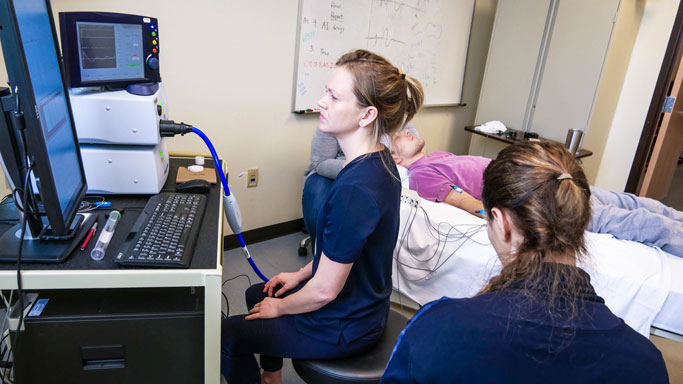
Study Description: This study will examine the affects of constant electrical stimulation on the stepping of persons with spinal cord injury (SCI). Surface electrical stimulation will be applied over the lumbar spine area during standing or stepping in the robotic gait orthosis, called the Lokomat®. Muscle activity and its changes will be recorded and analyzed with standard electromyography (EMG) electrodes over multiple leg muscles.
 

To participate in this study, you must:

  • Be 18-59 years of age
  • Have a SCI AIS of A, B, C, D, or E or have no SCI
  • Have a SCI level between C4-T10
  • Have time since injury more than 6 months

Contact: Email Joy Bruce, MSPT, PhD, NCS or call 404-603-4611.


Effects of acute intermittent hypoxia on locomotor performance in human SCI  [521]

Principal Investigator:  Randy Trumbower, PT, PhD - Emory University

Study Description: The purpose of this study is to determine whether breathing air with low oxygen levels for brief periods (termed intermittent hypoxia) will improve leg function after spinal cord injury. Improvements in leg function may show the ability of the nervous system to strengthen neural pathways based on new experiences. To test this possibility, this study will determine if mild intermittent hypoxia results in long-lasting improvement of leg strength and walking in persons with incomplete spinal injury.

To participate in this study, you must:

  • Have a motor-incomplete (AIS C or D) SCI
  • Have an SCI level between C5-T12, with no lower motor neuron involvement
  • Be 18-65 years of age
  • Be able to walk with no more than minimal assistance
  • Not have had physical therapy for a at least 8 weeks

Contact: Email Leslie VanHiel, DScPT or call 404-350-7681.


Comparing the Relationship Between Somatosensation and Movement of the Hand in Persons with Tetraplegia and those who are Able-Bodied  [529]

Principal Investigator: Deborah Backus, PhD, PT

Study Description: The purpose of this study is to evaluate if training with sensory stimulation combined with repeated movements will improve the way a person with tetraplegia feels in their wrist and hand, how much they feel, and if this feeling will affect tasks used in everyday life. Participants will undergo sensory and motor testing one day before and one after a training period, and will participate in 5 consecutive days of training on a device that combines vibration and repeated movement of the wrist and hand and testing (total 7 days).
 

To participate in this study, you must either :

  • With no neural or musculoskeletal injury or disease that affects the central nervous system or your arms and hands OR
  • Have a an SCI at C8-T1
  • SCI is AIS classification A or B
  • SCI more than 1 year ago
  • Be 18-50 years of age
     

Contact: Email Heather Guerrero, or call 404-350-7522.


Comparing Upper Extremity Muscle Activation Patterns During Grasping Task in Persons with Tetraplegia and Able-Bodied Participants  [530]

Principal Investigator: Deborah Backus, PhD, PT Collaborator: Lewis Wheaton, PhD - Georgia Institute of Technology

Study Description: To develop and analyze a tool to assess arm muscle activity patterns during a grasping task. This tool will use surface electromyography to compare timing, strength, and duration of specific muscle activity patterns in persons who have chronic, motor complete tetraplegia with those who are able-bodied. This tool may then be used to categorize movement by the level and severity of cervical SCI.

To participate in this study, you must:

  • Have no spinal cord injury or have a spinal cord injury at C7-T1, AIS A or B
  • If have SCI, it is ≥ 1 year
  • Be between 18 and 50 years of age
  • Be capable of sitting upright in your wheelchair for more than one hour
  • Be capable of holding a hand-held dynamometer

Contact: Email Heather Guerrero, or call 404-350-7522.


A new measure of neurological and behavioral recovery after SCI  [536]

Principal Investigator: Keith Tansey, MD, PhD

Study Description: The purpose of this study is to determine the validity and reliability of a new clinical and research tool for spinal cord injuries, the Phase System (version II). This tool was developed by the NeuroRecovery Network to classify severity of SCI and to measure behavioral and functional recovery across a broad range of SCIs.

Contact: Email Brian Holliday, DPT or call 404-350-7367.


The Effects of Exercise Training on Wheelchair Propulsion Economy and Imposed Upper Extremity Joint Forces [538]
 

Principal Investigator: Michael Hales, PhD; Kennesaw State University

Study Description: The aim of this study is to determine the effects of 12 weeks of aerobic and/or resistance training on joint stresses and movement efficiency of the arms while pushing a manual wheelchair in persons with paraplegia. This study may help researchers identify the best type of exercise for preventing injury to the arms and shoulders of this group of individuals.

To participate in this study, you must:

  • Be 18-60 years of age
  • Have an SCI classified as AIS A, B, or C for at least one year
  • Have a level of injury between T2-T12
  • Currently be using a manual wheelchair as the primary means of mobility

Contact: Email Nicholas Evans, MHSc, ACSM-HFS or call 404-590-9565.


Assessing Upper Extremity Muscle Activation Patterns Across Time During a Grasping Task in Persons with Tetraplegia   [545]

Principal Investigator: Deborah Backus, PhD, PT

Study Description:  The purpose of this study is to understand how muscles in the arm and hand work together during movement in people with tetraplegia due to spinal cord injury (SCI). Sixteen (16) muscles will be studied, and participants will be followed for up to 6 months post-injury.  

To participate in this study, you must:

  • Be 18-65 years of age
  • Have an SCI classified as AIS C or D for at least one year
  • Have a level of injury between C6-T1
  • Be capable of holding the testing device in your enrolled hand

Contact: Email Casey Riley, DPT, or call 404-603-4296.


Development of a Research Tool Called the Capabilities of Arm and Hand in Tetraplegia (CAHT) Used to Measure Arm and Hand Strength in Spinal Cord Injury [547]

Principal Investigator: Deborah Backus, PhD, PT

Study Description: The purpose of this study is to test a newly developed tool to evaluate arm and hand function in people with tetraplegia due to spinal cord injury.

To participate in this study, you must:

  • Be 18-50 years of age
  • Have a cervical level of injury
  • Be receiving inpatient services at the Shepherd Center
     

Contact: Email Heather Guerrero, or call 404-350-7522. 


The Longitudinal Assessment of Upper Limb Function and Capacities in Individuals with Tertraplegia  [553]

Principal Investigator: Deborah Backus, PhD, PT

Study Description: The purpose of this study is to document changes in hand function during rehabilitation at Shepherd Center in order to gain a better understanding of arm and hand recovery in people with tetraplegia using a new hand test called The AuSpinal.

Contact:Email Sherry Turner, or call 404-367-1394.


Responsiveness of a Neuromuscular Recovery Scale for Spinal Cord Injury: Inpatient and Outpatient Rehabilitation  [554]

Principal Investigator: Keith Tansey, MD, PhD

Study Description:  The purpose of this proposal is to assess the responsiveness of the new recovery classification tool for spinal cord injury developed by the NRN, called the Neuromuscular Recovery Scale (NRS). The purpose of the NRS is to measure recovery from SCI over time and across therapy settings. Our intent is that the NRS will serve as a clinically-relevant SCI outcome measure for use in rehabilitation clinics, cohort studies, and randomized clinical trials.

Contact: Email Brian Holliday, DPT, or call 404-350-7367.


Quantifying the Effects of Locomotor Training on Lower Extremity Motor Control in People with Chronic, Incomplete Spinal Cord Injuries  [555]

Principal Investigator: Joy Bruce, MSPT, PhD, NCS

Study Description:  The purpose of this research is to use a standardized electrophysiological assessment tool, the Brain Motoro Control Assessment (BMCA), to assess and monitor changes in motor control in participants with chronic, motor-incomplete SCI (AIS C or D) over a 12-week robotic locomotor training program.

Contact: Email Joy Bruce, MSPT, PhD, NCS, or call 404-603-4611.


Modification of the ABLE Scale: A Factor Analysis Study  [567]

Principal Investigator: Keith Tansey, MD, PhD

Study Description:  The Activity-based Balance Level Evaluation (ABLE) Scale is a new clinical measure to assess balance after spinal cord injury (SCI). It is being developed by clinicians in the NeuroRecovery Network (NRN). This new scale combines items from other current balance measures with new sitting and walking items. This study is the next phase in investigating its features and its ability to measure balance after SCI.

Contact:Email Kristen Casperson, DPT, or call 404-350-7783.


A Retrospective Study of Demographic, Clinical, and Radiographical Risk Factors for Development of Neurogenic Heterotopic Ossification in Adults with Traumatic Neurological Injuries  [573]

Principal Investigator:  Monica Umpierrez, MD

Study Description: Neurogenic Heterotopic Ossification (NHO) is a disease of excessive bone growth that sometimes follows traumatic neurological injuries, such as spinal cord and brain injuries. Extra bone is built-up at joints below the level of the injury, most often the hip joint, limiting positions and movement. This project proposes to review the medical charts and X-rays of Shepherd Center adult patients with traumatic neurological injuries over the past ten years who developed NHO to determine risk factors and provide earlier or preventive treatment.

Contact: Email Monica Umpierrez, MD, or call 404-257-2450. 


Advanced Robotic Therapy Integrated Centers (ARTIC) Data Collection and Sharing Cooperative  [577]

Principal Investigator:  Keith Tansey, MD, PhD

Study Description:  Seven international rehabilitation centers have come together with Hocoma, Inc. to form a group called Advanced Robotic Therapy Integrated Centers, or ARTIC. The purpose of this group is to create a database to catalogue the use and outcome of this company’s devices (i.e. Lokomat, Armeo devices, and Erigo). The database for each device will be used to 1) determine guidelines for device use and 2) determine effectiveness of device by creating and following a large cohort during rehabilitation.

Contact: Email Leslie VanHiel, PT, DScPT or call 404-350-7681.


Assessing Upper Extremity Motor Control using the Armeo Spring and Armeo Power [579]

Principal Investigators: Keith Tansey, MD, PhD

Study Description: The purpose of the pilot study is to: (1) evaluate arm performance characteristics of patients with cervical SCI and TBI using the Armeo Spring, and (2) evaluate the relationship between game performance and muscle strength using the Armeo Power.

To participate in this study, you must:

  • Be between 18-65 years of age.
  • Have a cervical SCI or TBI less than 6 months ago.
  • Be able to follow commands.
  • Be able to sit up for 1 hour without skin damage.
     

Contact: Email Casey Riley, PT, DPT or call 404-350-3066.

Intake Form

Sign up here to participate in our research programs.

AXIS

Sign up to receive our spinal cord injury newsletter.

SCI Research Fellowship

Download the brochure for more information.

Contact Us

Shepherd Center
2020 Peachtree Road NW
Atlanta, GA
30309-1465
Tel. 404-352-2020

Latest Tweet

Stay safe this holiday #weekend. Don't #dive or drive #distracted. Wear a #helmet. http://t.co/BNjm4IRdji

# 1 day ago
English En Espanol