
menbar
Diaphragm Pacing Stimluation (DPS)
Research Annual Report
menbar
menbar
Sign Up
To receive our magazine or newsletters.

menbar

Spinal Cord Injury Research

Shepherd Center supports basic and applied research efforts that are scientifically sound, safeguard the welfare of research participants, and have the potential to advance the field of rehabilitation medicine. Shepherd Center partners with business, industry and institutions of higher education to develop solutions for paralysis, impaired memory, spasticity and a variety of other neurological problems. 

Until neural regeneration becomes a reality, Shepherd Center will continue to focus on preserving neurological function through prevention, increasing function through intervention, and setting the standard for independence and quality of life among individuals with spinal cord and brain injuries. 

The following is a summary of current initiatives for spinal cord injury research at Shepherd Center.

Prediction of Long-Term Secondary Conditions following SCI(NIDRR; James Krause, PhD) [204]

Electronic Activation Of The Diaphragm For Ventilatory Assist – Device: Neurx RA/4 Ventilatory Assist Device FDA IDE #G920162 – Neurx – RA/4 Percutaneous, Multi Channel, Neuromuscular Stimulator (Brock Bowman, MD, Andrew Zadoff, MD, James Settle, MD, Saeid Khansarinia, MD, Karen Kline, PA, Shepherd Center) IDRR; James Krause, PhD) [382]

A Multi-Center, Double-Blind, Randomized, Placebo-controlled, Parallel-Group Study of the Safety and Efficacy of Repeat Treatment with Two Dose Levels of BOTOX® (Botulinum Toxin Type A) Purified Neurotoxin Complex Followed by a Treatment with BOTOX® in Patients with Urinary Incontinence Due to Neurogenic Detrusor Over-Activity (Jenelle Foote, MD, Continence Clinic Director; Bruce Green, MD, Urology Medical Director; Paul Alphonse, MD, Wylly Killorin, MD; Kevin Rozas, MD; Shepherd Center) [389]

Investigating the Impact of Therapeutic Recreation on the Health Outcomes of Individuals with SCI (Susan Skolnick, Manager, Therapeutic Recreation, Shepherd Center; Dr. Richard Williams, Associate Professor; Janis Florendo, Exercise Specialist, Shepherd Center) [387]

Evaluation Of Effect Of Orthotic Use During Locomotor Training On The Manual Body-Weight Supported Treadmill System (Deborah Backus, PhD, PT, Shepherd Center; Annette Daly, BME, Georgia Institute of Technology) [384]

Post Operative Bracing Of C4-5 And C5-6 Spinal Fractures With Paralysis (David Apple, MD, Shepherd Center) [385]

Evaluation Of Potential Candidates For The Neurorecovery Network Locomotor Training Program: Assessment Of Shepherd Center Inpatients With ASIA C Or D Classification (Deborah Backus, PhD, PT, Leslie VanHeil, BME, MSPT, John Lin, MD, Donald Leslie, MD, Sarah Morrison, PT, Shepherd Center) [386]

Spine Bracing following ORIF for Fracture(Shepherd Center Intramural Fund; David Apple, MD, Shepherd Center) [208]

Lifetime Outcomes and Needs: Refining the Understanding of Aging with Spinal Cord Injury  (NIDRR; Daniel P. Lammertse, MD/Susan Charlifue, Craig Hospital & James Krause, PhD)   [229]

A 6 Year Longitudinal Study of Community Integration, Subjective Well-Being and Health after SCI: Relationship with Gender, Race/Ethnicity and Environment  (NIDRR; James Krause, PhD)  [242]

Neuromuscular Electrical Stimulation to reduce Glenohumeral Subluxation after SCI  (Shepherd Intramural Fund; David Apple/Joy Bruce/Shari McDowell, Shepherd Center) [246]

Sibling Relationships of Youth with SCI(Zolinda Stoneman, University of Georgia, Tamara King, Shepherd Center) [273]

Real-Time 3D Computer Modeling in SCI Rehabilitation   (GIT; Stephen Sprigle, PhD, R. Chitre, PhD, Leslie VanHiel, BME, MSPT, Shepherd Center)  [277]

Stability of Vocational Interests Two Years after Spinal Cord Injury: Relationship with employment, participation, and subjective well-being  (NIDRR; James Krause, PhD, Medical University of South Carolina, Leslie Hudson, Shepherd Center)  [297]

A Phase II Multicenter, Randomized Controlled Study to Evaluate the Safety and Efficacy of Autologous Incubated Macrophages for the Treatment of Patients with Complete Spinal Cord Injuries  (Proneuron Biotechnologies; David Apple, MD, Michael Jones, PhD, Shepherd Center)  [309]

A Stratified, Randomized, Placebo-Controlled, Single Blind Study of Strength and Endurance Training of the Diaphragm Using the Threshold Inspiratory Muscle Trainer in Acute Spinal Cord Injury (James Settle, MD, Diane M. Johnston, MSPT, Shepherd Center)   [317]

Effects of a goal-directed exercise program on functional improvement, self-efficacy, and ASIA scores in spinal cord injured quadriplegics" (Travis Roy Foundation; Susan Sheehy, RN, FAAN, Shepherd Center)   [323]

A Phase II, Double-Blind, Placebo Controlled, Multicenter Study to Assess the Efficacy and Safety of HP184 at 100, 200 and 400mg Doses Administered Orally Once Daily for Twenty-Four Weeks in Adult Subjects with Chronic Spinal Cord Injury (CSCI)  (AVENTIS; David Apple, MD, Brock Bowman, MD, Shepherd Center)   [326]

Peer Caregivers of a Spinal Cord Injured Teenager: Impact on the Peer Caregivers, the Patient, and the Patient's Family – A Qualitative Descriptive Study  (Susan Sheehy, RN, FAAN, Shepherd Center)   [329]

Development & testing of a handheld device for detection of erythema & bruising(Stephen Sprigle, PhD, GIT/CATEA, Chris Mauer, PT, Shepherd Center)  [331]

Hardiness in SCI Patients as it relates to Secondary Complications(Wayne Ware, MEd, LPC, Shepherd Center)  [339]

Lactobacillus GG for the Prevention of Antibiotic Associated Diarrhea Clostridium Difficile in Hospitalized Spinal Cord Injured Patients (John Lin, MD, Shepherd Center)  [357]

Pilot Study of Effectiveness of an Upper Extremity Computer-controlled Exoskeleton Device for Retraining Movement in Individuals with Tetraplegia (Deborah Backus, PhD, PT, Stephen Sprigle, PhD, PT, David Apple, MD, Shepherd Center) [359]

Pilot Study of Effectiveness of the AMES Device for Retraining Wrist and Hand Movement in Individuals with Tetraplegia  (Deborah Backus, PhD, PT, Paul Cordo, PhD, David Apple, MD, Shepherd Center) [360]

Low frequency muscle fatigue in individuals with long-term spinal cord injury. (Kevin McCully, Ph.D., Edward T. Mahoney, University of Georgia)  [374]

Low –Tech Virtual Reality for Rehabilitation after Spinal Cord Injury  (Sheryl Flynn PT, PhD, Deborah Backus PT, PhD)  [375]

Prediction of Long-Term Secondary Conditions following SCI (NIDRR; James Krause, PhD) [204]

This research will compare the health behaviors and health outcomes of people with SCI to that of the general population and populations of similar race/ethnicity, to determine whether people with SCI are less likely to perform health behaviors intended to prevent chronic health conditions.  Data will be compared with general population data from the CDC's Behavioral Risk Factor Surveillance System. 

A Multi-Center, Double-Blind, Randomized, Placebo-controlled, Parallel-Group Study of the Safety and Efficacy of Repeat Treatment with Two Dose Levels of BOTOX® (Botulinum Toxin Type A) Purified Neurotoxin Complex Followed by a Treatment with BOTOX® in Patients with Urinary Incontinence Due to Neurogenic Detrusor Over-Activity (Jenelle Foote, MD, Continence Clinic Director; Bruce Green, MD, Urology Medical Director; Paul Alphonse, MD, Wylly Killorin, MD; Kevin Rozas, MD; Shepherd Center) [389]

The purpose of the study is to evaluate the safety and efficacy of each of two dosages of BOTOX® (200 U or 300 U) compared to placebo injected into the Detrusor for the treatment of urinary incontinence caused by Neurogenic Detrusor over activity in patients who have not been adequately managed with anticholinergic therapy. The clinical hypothesis is that BOTOX® (one or both of the doses studied) is more effective than placebo at improving the symptoms of Neurogenic Detrusor over activity as measured by the reduction in weekly frequency of episodes of urinary incontinence. Neurological disease involving the spinal cord can result in incontinence secondary to a loss of inhibitory input from the micturition center and from the interruption of the spinobulbospinal pathways which normally control bladder behavior. In the event of a spinal cord lesion, a change of balance of the effects of the afferent fibers, located between the muscle and submucosa of the bladder is seen. The unmyelinated C fibers become functionally dominant and the Detrusor hyperreflexia described in such patients is considered due to the reflex mediated by these unmyelinated C fibers. In recent studies there is evidence for the successful use of BOTOX® in the management of neurogenic incontinence.

Investigating the Impact of Therapeutic Recreation on the Health Outcomes of Individuals with SCI (Susan Skolnick, Manager, Therapeutic Recreation, Shepherd Center; Dr. Richard Williams, Associate Professor; Janis Florendo, Exercise Specialist, Shepherd Center) [387]

The purpose of this research is to analyze existing data at the Shepherd Center in an attempt to investigate the influence of therapeutic recreation services on the secondary health outcomes of individuals with Spinal Cord Injury. Therapeutic Recreation services will be measured by the number of units each patient received at Shepherd. Therapeutic Recreation billable units (Individual Therapy, Group Therapy, community Outing, Diversionary, Camping) will be collected to determine if involvement in Therapeutic Recreation modalities is influential in positively impacting the health status of patients.  


Electronic Activation Of The Diaphragm For Ventilatory Assist – Device: Neurx RA/4 Ventilatory Assist Device FDA IDE #G920162 – Neurx – RA/4 Percutaneous, Multi Channel, Neuromuscular Stimulator (Brock Bowman, MD, Andrew Zadoff, MD, James Settle, MD, Saeid Khansarinia, MD, Karen Kline, PA, Shepherd Center) [382]

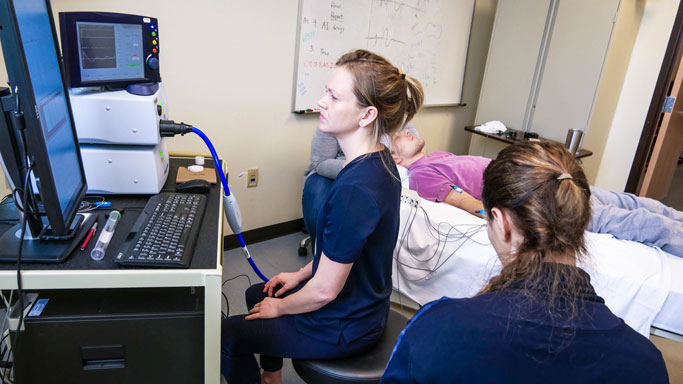
The purpose of the study is to determine if a new, investigational diaphragm pacing system can provide part or full time respiratory support to persons who normally need a mechanical ventilator. This investigational system is different from current diaphragm pacing systems because the electrodes are placed in the diaphragm muscle instead of on the phrenic nerves. Patients with high-level spinal cord injuries typically experience chronic ventilatory insufficiency due to respiratory muscle paralysis; these patients must be supported by diaphragm pacing, which has been accomplished predominantly through positive pressure mechanical ventilation. A more recent approach to diaphragm pacing involves direct stimulation of the phrenic nerve via surgically implanted electrodes. In order for the patient to be implanted with the NeuRx RA/4 device, they must have an intact phrenic nerve. There are only approximately 267 patients per year in the US who are candidates for diaphragm pacing support by any method; despite the potential benefits of direct phrenic nerve stimulation, only a small number of patients have elected for this approach due to its inherent surgical and implementation risks.  

Evaluation Of Potential Candidates For The Neurorecovery Network Locomotor Training Program: Assessment Of Shepherd Center Inpatients With ASIA C Or D Classification (Deborah Backus, PhD, PT, Leslie VanHeil, BME, MSPT, John Lin, MD, Donald Leslie, MD, Sarah Morrison, PT, Shepherd Center) [386]

Locomotor Training is a rehabilitative technique for people with spinal cord injury (SCI) that has been shown to improve some people’s recovery of independent walking and return to effective community ambulation. Locomotor training can also improve overall health including improving cardiovascular function, increasing bone density and decreasing spasticity. This intervention is based on current knowledge of how the brain and spinal cord control stepping and how the nervous system learns a motor skill such as standing and stepping. The performance of these tasks is dependent on using optimal methods of practice with assistance from therapists. Clinicians, and individuals who cannot walk or walk poorly due to a neurological disease, have become increasingly interested in using Locomotor Training in their rehabilitation centers, however, there is little data available on the specifics of the intervention including optimal training strategies for specific patient populations, cost of implementation and level of reimbursement.

Shepherd Center is one of four centers in the network that has been designated by the Christopher Reeve Paralysis Foundation, the Christopher and Dana Reeve Paralysis Resource Center (CRF) and the Centers for Disease Control of the United States Department of Health and Human Services (CDC) as a NEURORECOVERY NETWORK CENTER FOR THE RECOVERY OF WALKING AFTER SPINAL CORD INJURY (NRN). These centers are specifically trained in techniques and principles deemed to be most effective for improving health and locomotor abilities in individuals with motor incomplete SCI. These centers are charged with evaluating the effectiveness of the NRN LT intervention in individuals with motor incomplete SCI, who have completed inpatient rehabilitation, as well as the cost effectiveness of this model, in order to understand the best method and model for providing this activity-based intervention to as many individuals with SCI as possible.
The CRF and CDC have also charged the NRN with providing information about potential candidates (individuals with ASIA C or D classification) who are not currently eligible for the NRN LT program because they are still receiving inpatient rehabilitation services. Specifically, CRF and CDC want information related to the demographics, and functional, neural and health status of individuals who are inpatients and NOT receiving the NRN LT program, in order to justify including inpatients in the scope of care of the NRN LT program.
Shepherd Center physical therapists will perform evaluations that have not been completed on 10 inpatients at Shepherd Center. The investigators will provide this data, as well as data obtained from the patients’ medical records pertaining to their demographics (causes, age at onset, neurological level, completeness of injury, etc.), neural function, muscle strength, sensory function, pain, subjective measures, and functional outcomes to a secured database that will be established at the Frazier Rehabilitation and Neuroscience Institute, which is the lead center in the NRN. This information will be used to generate reports for use by the NRN and other rehabilitation centers to facilitate the implementation of effective strategies to provide Locomotor Training to appropriate patient populations.

Evaluation Of Effect Of Orthotic Use During Locomotor Training On The Manual Body-Weight Supported Treadmill System (Deborah Backus, PhD, PT, Shepherd Center; Annette Daly, BME, Georgia Institute of Technology) [384]

This Manually assisted body-weight supported treadmill training provides the opportunity for individuals with motor incomplete spinal cord injury (ASIA C & D) to exercise in walking, and to potentially facilitate recovery of stepping and gait. The task, however, is often quite difficult and there is often concern about the integrity of weak joint during repeated stepping on misaligned, poorly stabilized joints in paralyzed extremities. There are several degrees of freedom to control, ranging from the trunk, pelvis, hips and knees to the ankles. One school of thought supports use of external support while training, to decrease the degrees of freedom and to optimize the nervous system’s ability to control multiple joints and muscles. Another school of thought is staunchly opposed to the use of external devices, arguing that the trainer should facilitate proper alignment and activation of muscles using sensory cues. This group argues that the use of external braces, such as AFO’s restrict the “normal” sensory input and muscle activation patterns. Yet, there is no research to substantiate either view.


In a study by Dietz and Harkema, the amplitude of muscle activation recorded by EMG was directly related to the level of loading on the legs during stepping of both able-bodied and spinal cord injured subjects. EMG was used in order to distinguish the effect of loading the limbs during locomotion on the lower extremity musculature and as a means to represent the activity of these muscles6. This study is relevant because it suggests that any apparatus that decreases the ability to fully bear weight on the feet and through the legs will also potentially decrease muscle activity and therefore impair locomotion.


Spine Bracing following ORIF for Fracture (Shepherd Center Intramural Fund; David Apple, MD, Shepherd Center) [208]

The overall hypothesis of this study is that people with SCI who are not immobilized following stabilization surgery will experience no more complications and will heal as well as people with SCI who are immobilized.  The medical endpoint of this study is spinal fusion as measured by an X-ray at one-year post surgery.  Participants will be those who are admitted to Shepherd Center following a spinal fracture and who have had some form of stabilization surgery (e.g., insertion of screws and rods or hooks and rods).  Medical records of the participants will be examined to determine variables related to level of injury, type of surgery, type of bracing, and complications of surgery.  At one-year post-surgery, medical records of participants will again be examined to determine, by viewing X-ray films, if spinal fusion has occurred.

Lifetime Outcomes and Needs: Refining the Understanding of Aging with Spinal Cord Injury  (NIDRR; Daniel P. Lammertse, MD/Susan Charlifue, Craig Hospital & James Krause, PhD)   [229]

Comprehensive, longitudinal, multi-center effort to explore the incidence and prevalence of several health conditions that accompany living with SCI, and the services available to individuals with SCI as they attempt to address these conditions throughout their lives.  Findings will be used to develop risk models for selected secondary health conditions, refine existing web-based health risk assessment profile, and describe patterns of health services utilization, as well as availability of and satisfaction with such services.
 

Post Operative Bracing Of C4-5 And C5-6 Spinal Fractures With Paralysis (David Apple, MD, Shepherd Center) [385]

After surgery to stabilize fractures at C4-5 and C5-6, the standard recommendation for immobilization in surgical texts is 3 to 4 months. With the newer stabilization procedures, the length of immobilization time can be safely shortened. Charts of patients who were stabilized between 2002 and 2004 will be reviewed to determine:
1. The length of time of post operative immobilization,
2. Any problems following discontinuing bracing, and
3. Successful union of fracture and fusion at 1 year follow-up.


A 6 Year Longitudinal Study of Community Integration, Subjective Well-Being and Health after SCI: Relationship with Gender, Race/Ethnicity and Environment  (NIDRR; James Krause, PhD)  [242]

This study is to identify the nature and extent of changes in outcomes over a six-year period to discover whether changes disproportionately impact outcomes among either women or minorities, and the nature of environmental factors that precipitate these changes, using state-of-the art measure of environmental facts that were not available at the time of an initial previous study. 

Neuromuscular Electrical Stimulation to reduce Glenohumeral Subluxation after SCI  (Shepherd Intramural Fund; David Apple/Joy Bruce/Shari McDowell, Shepherd Center) [246]

This research will address the efficacy and effectiveness of neuromuscular electrical stimulation (NMES) in reducing glenohumeral (G-H) subluxation while validating the use of a caliper which may prove more cost efficient for clinical practice and research in assessing degree of shoulder subluxation.  A large percentage of individuals with SCI can be expected to experience shoulder pain at some point, and development of therapeutic interventions aimed at either reducing or preventing these patients' pain is imperative.  The outcome of this research will be relevant to many clinical organizations.

Sibling Relationships of Youth with SCI (Zolinda Stoneman, University of Georgia, Tamara King, Shepherd Center) [273]

The goal of this study is to gain information about: 1) how relationships between siblings change when one of the siblings sustains a spinal cord injury, and 2) how parenting practices can support positive sibling relationships. The benefits that may be expected from the study are that information obtained may help service-providers provide support to families that assist adolescent siblings in adjusting to and coping with spinal cord injuries.   Information obtained from this study may also assist parents in better understanding how to support positive sibling relationships post-injury.

Real-Time 3D Computer Modeling in SCI Rehabilitation   (GIT; Stephen Sprigle, PhD, R. Chitre, PhD, Leslie VanHiel, BME, MSPT, Shepherd Center)  [277]

This project will use innovative, noninvasive technology to study and train the movement of mobility-impaired patients during one of two tasks: transferring between a wheelchair and a mat and walking a short distance. The technology models body movement based on reflective markers placed on garments that the participants can easily don and doff with assistance as needed. A total of 43 subjects were enrolled in this study.  Approximately half of the subjects involved used the real-time animations of their movement to assist their clinical gait or transfer training. Therapists also used the motion capture system twice a week to assist with teaching four subjects transfer techniques. Because the system appeared helpful, a similar, more clinically appropriate (smaller and less expensive) system will be identified and tested at a later time. Finally, we asked 19 subjects to perform 6 transfers from his or her wheelchair to a therapy mat (3) and from the therapy mat to his or her wheelchair (3) while wearing the garments with reflective markers.

The data collected is currently being analyzed to better understand the movement patterns used in transfer techniques.  So far, we have concluded that people with mobility-impairments use a variety of strategies to transfer between two surfaces. These different strategies can be recognized by analyzing the height of the buttocks, the placement of the hands, the rotation between the hips and shoulders, and the timing of each movement. Our continuing analysis aims to categorize the transfer strategies and then correlate them to such factors as injury level, time since injury, and body weight.

Stability of Vocational Interests Two Years after Spinal Cord Injury:  Relationship with employment, participation, and subjective well-being  (NIDRR; James Krause, PhD, Medical University of South Carolina, Leslie Hudson, Shepherd Center)  [297]

The purpose of this study is to identify the nature and stability of vocational interests over a two-year period after SCI as a function of gender, race-ethnicity, age and etiology; and their relationship with participation in community activities, return to employment and subjective well being. The unique aspects of this study include collection of test-retest interest data when the first measurement was immediately after injury (before interests have the time to change) and the identification of the relationship between interest type, interest congruence and interest change with primary SCI outcomes. The inclusion of both women and racial-ethnic minorities will help us understand how gender and ethnic factors relate to both interest change and SCI outcomes.  The primary objectives will be to identify how much interests change in the first two years after SCI onset, factors related to change, and the extent to which interest type and interest change are associated with employment, participation and subjective well-being.  It is hypothesized that: (a) the greatest interest change will occur among those who were youngest and those whose interests are the most incongruent with their physical limitations, particularly those with the most severe SCIs, (b) interests will change in the direction of greater congruence with SCI limitations, and (c) those with congruent interests will be more likely to return to gainful employment, have higher levels of participation and subjective well-being, and a lower incidence of depressive symptoms.   Two year follow-up data will be collected on approximately 265 participants with traumatic SCI who were a minimum of 16 years old at the first interview.

A Phase II Multicenter, Randomized Controlled Study to Evaluate the Safety and Efficacy of Autologous Incubated Macrophages for the Treatment of Patients with Complete Spinal Cord Injuries  (Proneuron Biotechnologies; David Apple, MD, Michael Jones, PhD, Shepherd Center)  [309]

The purpose of this study is to assess the efficacy of macrophages that have been incubated with dermis (skin) and administered into the spinal cord of patients with complete spinal cord injury. There will be approximately 61 patients enrolled in this study, which will also examine the possible risks of macrophage therapy.  Subject participation in this study is expected to be of 12 months in duration.  Follow-up may be extended for another 12 months.  Treatment will involve six injections into the spinal cord, caudal to the lesion, in a single procedure.  Dose is 0.25 million CD14+ cells per injection site.  Once subjects qualify and agree to take part in the study, they will either be assigned to the treatment group, or to the control group (no treatment).  There is a 2 in 3 (67%) chance of being assigned to the treatment group.  Individuals in the treatment group will undergo a surgical procedure where a surgeon will remove a piece of skin, which will be used to "educate" the macrophages that will be collected from a blood sample.  These macrophages will later be injected near the spinal cord injury in another surgical procedure.  Both the treatment group and the control group will be expected to follow through with the required examinations and evaluations throughout the duration of the study.  The screening, randomization, and experimental therapy would have to be completed by the 14th day after the injury.

A Stratified, Randomized, Placebo-Controlled, Single Blind Study of Strength and Endurance Training of the Diaphragm Using the Threshold Inspiratory Muscle Trainer in Acute Spinal Cord Injury  (James Settle, MD, Diane M. Johnston, MSPT, Shepherd Center)   [317]

Subjects meeting the inclusion criteria will sign consent prior to participating in the study. Each subject will be randomized into a test group or control group. All participants will be stratified within each group based on level of injury. Each subject will be followed for a six-week period and receive standard rehabilitation for their specific SCI injury. Forced Vital Capacity (FVC), Forced Expiratory Volume (FEV1), FVC/ FEV1, Maximal Voluntary Ventilation (MVV), and Maximal Inspiratory Pressure (PImax) will be measured on initial evaluation and conclusion of the six-week period on all subjects. Subjects will also complete a quality of life questionnaire (COPM) and perceived level of exertion (Borg) on initial evaluation and conclusion of the study.  Both groups will participate in breathing exercises using the Threshold IMT. The device will be utilized two times per day with a minimum of eight breaths. Once an individual can utilize the device for twenty consecutive breaths, the subject will be timed for duration. All subjects will be given a goal to achieve of fifteen minutes in duration for each training session. The device used by the control group will be modified to remove the resistance from the device, thus removing the training load. PImax will be measured weekly and the training load will be calculated at 60% of PImax and adjusted accordingly for the test group. Individuals weaning from mechanical ventilation will tolerate a minimum of two (2) hours off of mechanical ventilation prior to admission into the study. Individuals with tracheotomies will use the IMT device with a simple modification to connect the device to the inner cannula of the tracheotomy tube, with the cuff inflated on the tracheotomy tubing. A second modification will be made to allow supplemental oxygen to be utilized if prescribed by the patient's physician. Once the participant progresses to a plugged tracheostomy or button stoma, the device will be used in its standard application via mouthpiece and nose clip. When the button is pulled, gauze with finger occlusion will be utilized during training sessions. This will help reduce disruption of the closure of the stoma site and allow for the pressure load to be directed through the device, not the stoma. Upon completion of 1 year from the beginning of the study, the data will be collected and statistics will be applied to determine effect of the training device.

Effects of a goal-directed exercise program on functional improvement, self-efficacy, and ASIA scores in spinal cord injured quadriplegics"  (Travis Roy Foundation; Susan Sheehy, RN, FAAN, Shepherd Center)   [323]

This research study is being conducted to determine if a program of goal-focused exercises for spinal cord injured quadriplegics will result in functional gains, increased self-efficacy, and a reduction of complications common to this patient population.  Subjects will participate in three two-hour exercise sessions each week for a period of approximately six months. The exercises have been specifically designed to improve balance and reach, upper and lower extremity strength, mobility, and function with the overall goal of increasing function and self-efficacy (which is a person's belief that they are able to reach a stated goal).  During the course of the research study, participants will have an ASIA examination done at baseline and at the conclusion of the program by an independent evaluator to determine motor and sensory function. A scoring tool known as the Quadriplegic Index of Function, will be used at the start of the study and every two weeks thereafter to measure functional improvements. A self-efficacy scoring tool (the Moorong Self-Efficacy Scale) will be used to measure self-efficacy gains at the start of the study, at the three-month point and at the conclusion of the study.  Participants will be required to keep a journal to track unexpected positive or negative effects of the program as well as any medical complications that may occur during the course of the study.  The researcher will review the journal each week.   Participants will be interviewed at the three-month point and the six-month point.  Questions asked in the interview will have to do with how the participant feels about participating in the study and what participating in the study has meant to the participants and their family members.

A Phase II, Double-Blind, Placebo Controlled, Multicenter Study to Assess the Efficacy and Safety of  HP184 at 100, 200 and 400mg Doses Administered Orally Once Daily for Twenty-Four Weeks in Adult Subjects with Chronic Spinal Cord Injury (CSCI)  (AVENTIS; David Apple, MD, Brock Bowman, MD, Shepherd Center)   [326]

This study is to evaluate the effect of the drug HP184 compared to a placebo on total muscle strength per American Spinal Injury Association (ASIA) manual motor test after 24 weeks of treatment in chronic spinal cord injury (CSCI) subjects.   240 CSCI subjects will be randomized into four different dose level groups (100, 200, 400 HP184 or placebo).  A placebo is a tablet without HP184.   The subject will have a 75% chance of receiving one of the HP184 doses compared to placebo.  The tests involved in this study are a muscle strength test, a Walking Index (WISCI), Modified Ashworth scale, Neopraxis gait and strength assessment, a sensory exam (ASIA), laboratory testing from blood and urine samples, ECG and questionnaires.  Participants enrolled in this study require approximately 10 visits.

Peer Caregivers of a Spinal Cord Injured Teenager: Impact on the Peer Caregivers, the Patient, and the Patient's Family – A Qualitative Descriptive Study  (Susan Sheehy, RN, FAAN, Shepherd Center)[329]

As funding has been progressively cut from the personal care assistants (PCA) allowances for most quadriplegic spinal cord injured patients, the burden of care has fallen on already psychologically, physiologically, and economically stressed family members.  In addition, teenage quadriplegic spinal cord injured patients are often socially isolated from their peers and depend on adult caregivers for their every need.  Alternatives for care giving must be identified.  One solution is the recruiting, training, and utilization of peer caregivers.  Many spinal cord injured patients, especially teens, have friends who would like to help out but they don't know where to start.  This descriptive study may present families with an alternative idea to relieve some of their caregiver burden.    Participant teenagers would be interviewed along with peer caregivers, and family members to be able to describe what the process has been like for all involved.  This study hopes to demonstrate the effectiveness and impact peer-care giving has had on teenaged and young adult quadriplegic spinal cord injured patients, their family members, and the peer-caregivers themselves.  The model of peer-caregivers may be useful to others with spinal cord injuries and their family members.  It may also provide a framework for future grounded theory.  The principle investigator will be the interviewer, focus group facilitator, and the observer.

Development & testing of a handheld device for detection of erythema & bruising (Stephen Sprigle, PhD, GIT/CATEA, Chris Mauer, PT, Shepherd Center)  [331]

The project has two related objectives.  First, the project will develop non-invasive methods for the early diagnosis of pressure ulcers in patients who are at risk for developing pressure ulcers.  Second, the project will develop a non-invasive method for detecting and determining the age and extent of bruises in populations at risk for physical abuse.  This protocol will use multi-spectral imaging as a means for detecting both incipient pressure ulcers and bruises.  Pressure ulcers frequently manifest themselves as a reddening of the effected skin.  Bruising results from trauma which damages the micro-vasculature and allows blood and other fluids to seep into the tissue.  Both of these skin discolorations can be easily missed in people with deeply pigmented skin.  The methods developed for detection must work universally, without regard for skin color.  The project aims to develop a simple, low cost, hand-held device for healthcare practitioners who currently rely on visual indicators to detect bruising or pressure ulcers.  The device will assist in determining whether a bruise or pressure ulcer exists, and the age and extent of damage, without addressing the cause of the damage.  This phase of the project will use multi-spectral imaging to examine all types of skin discolorations, including pressure ulcers, bruising, scars, birthmarks and hyper- and hypo-skin pigmentation.

Hardiness in SCI Patients as it relates to Secondary Complications (Wayne Ware, MEd, LPC, Shepherd Center)  [339]

The purpose of this study is to learn more about whether or not the ‘hardiness' of people helps to prevent continuing medical problems in people after SCI, i.e. skin sores, UTI's & re-hospitalization.  Hardiness is found in people who manage not only to survive SCI but become stronger emotionally than they were before the injury, rising above the circumstances presented to them.  In a telephone interview, subjects will be asked to answer a 34-item Health Related Hardiness Scale.  Hardiness, as a psychological construct, has been shown to have an impact on physiological and psychological adaptation to chronic illness.  This research will examine the construct of hardiness as it relates to secondary complications in SCI patients.  The hypothesis is persons who score higher on the Health Related Hardiness Scale will also exhibit fewer secondary complications, as recorded in the data base of Bridge Community Program patients.

Lactobacillus GG for the Prevention of Antibiotic Associated Diarrhea Clostridium Difficile in Hospitalized Spinal Cord Injured Patients  (John Lin, MD, Shepherd Center)  [357]

This study is aimed at determining whether Lactobacillus GG (in the form of the dietary supplement Culturelle) will reduce incidence of Antibiotic Associated Diarrhea Clostridium Difficile in hospitalized spinal cord injured patients.   Antibiotic Associated Diarrhea (AAD) is often a direct result of Clostridium Difficile infection.  Clostridium Difficile is a gram-positive anaerobic bacteria that produces two toxins, an enterotoxin A and a cytotoxin B which causes colitis and occurs in about 39% of hospitalized patients taking antibiotics. Length of stay for these patients increases by 8 days at an additional cost of $2000 - $4000.  These patients also have a fivefold increase in the incidence of other Healthcare Acquired Infections.   Shepherd SCI inpatients newly prescribed with antibiotics may participate this research study.  Consented and screened patients will be randomized into either Culturelle (Lactobicillus GG) or inactive placebo treatment for the duration of antibiotic therapy plus three days.  Clostridium Difficile toxin testing will be obtained at randomization and after completion of study agent.  Patients will be monitored for study outcomes and adverse events. Patient participation will last until discharged.  Patient participation will not exceed 4 weeks.

Pilot Study of Effectiveness of an Upper Extremity Computer-controlled Exoskeleton Device for Retraining Movement in Individuals with Tetraplegia  (Deborah Backus, PhD, PT, Stephen Sprigle, PhD, PT, David Apple, MD, Shepherd Center) [359]

Approximately half of all people with spinal cord injury (SCI) have tetraplegia affecting the strength, coordination and function of their arms.  Often, treatment of the arms in individuals with tetraplegia is not a high priority, since medical stabilization, transfer training, family training, bed mobility take precedent.  Yet people with tetraplegia report a desire to gain arm and hand function, and that such gain would improve their quality of life.  Furthermore, research in people with stroke and other types of movement dysfunction has provided evidence that repeated practice and forced use of affected limbs leads to gains in strength, coordination and function.  This innovative treatment approach has not been fully explored in people with arm movement dysfunction after SCI.  Muscle Tech Ltd., Katzein, Israel has designed a device that will allow us to explore the effectiveness of an exoskeleton device controlled by a computer for improving arm function after SCI.  This device will provide an additional way for people with tetraplegia to retrain movement and regain strength in their arms.  Six people who have been injured longer than one year will be enrolled in this study.  Participants must be between the ages of 18 and 59 and must commit to attending training sessions 3 times per week for 8 weeks.  For each session the person will wear an exoskeleton device that will be adjusted to fit their arm without pinching or pain.  This device will be controlled by a computer.  Each session will begin with an evaluation, followed by 45 minutes of treatment based on this evaluation.  Motions that will be evaluated and treated include elbow flexion and extension, supination and pronation, or combinations of flexion or extension with pronation or supination; movements may be made passively, actively or with resistance, in a variety of ranges, determined by the therapist based on the evaluation. We hypothesize that the Muscle Tech device will facilitate greater upper extremity strength and function and that these changes will lead to reports of improvements in quality of life.

Pilot Study of Effectiveness of the AMES Device for Retraining Wrist and Hand Movement in Individuals with Tetraplegia  (Deborah Backus, PhD, PT, Paul Cordo, PhD, David Apple, MD, Shepherd Center) [360]

Paul Cordo has developed an innovative device to build new connections in the brain after neurological injury in order to facilitate functional connections and plasticity.  His AMES device, couples assisted movement and enhanced sensation to treat people with arm movement deficits due to neurological deficits, such as stroke.  The novelty of this approach is that it utilizes what is known regarding the benefits of repeated movement for motor learning, and combines this with the hypothesis that coincident sensory and motor demands may induce functional plasticity after nervous system injury.  This device has shown promise for treating arm dysfunction due to the hemiplegia caused by stroke.  This approach has not been studied in people with movement dysfunction due to SCI. The AMES device may provide an additional way for people with tetraplegia due to a SCI to retrain movement and coordination, and to regain strength in their arms.  Five people with tetraplegia who have been injured longer than one year, will be enrolled in this study.  Participants must be between the ages of 18 and 59, and must commit to attending training sessions 3 times per week for 12 weeks.  Each session will begin with an evaluation, followed by 30 minutes of treatment based on this evaluation.  Motions that will be evaluated and treated include wrist flexion and extension, and when finger movements are available, combinations of finger and wrist flexion or wrist and finger extension.  While the subject assists the movement of the AMES device, the vibrators activate from the opposite muscles (e.g., when the wrist flexors are contracting for wrist flexion, the wrist extensor will be vibrated).  At the end of the study, each person will be reevaluated in terms of his or her strength, coordination, function and quality of life.  It is hypothesized that these individuals will experience improvements in all aspects of their arm function after use of the AMES device. 

Low frequency muscle fatigue in individuals with long-term spinal cord injury.  (Kevin McCully, Ph.D., Edward T. Mahoney, University of Georgia)  [374]

Muscle fatigue is greater in people with SCI than those without nervous system or musculoskeletal injury or dysfunction.  Currently, the mechanism for this increased fatigue is unknown.  One type of muscle fatigue is particularly interesting in that it is induced when muscles are artificially stimulated with neuromuscular electrical stimulation (NMES), as is commonly done in SCI rehabilitation and research.  Electrical stimulation is being used extensively in rehabilitation and research studies to increase muscle size and fitness in those with SCI. "Low frequency fatigue (LFF)" is defined as a loss of muscle force at low activation frequencies, which are routinely used for NMES of paralyzed muscles.  LFF has been shown to last up to 24 hours or longer.  This is important because rehabilitation of SCI patients may involve low frequency NMES, which is likely to be performed several times per day. This prolonged reduction in muscular force at low frequencies could potentially limit the goals of rehabilitation, especially if muscular force is of importance.  The general aim of this study is to better understand the mechanisms of LFF, in particular in people with SCI.  The study is unique because it will test if it takes longer for paralyzed muscle to recover from LFF, and whether electrical stimulation protocols will affect this response. LFF has clinical implications in that people with SCI may use low-frequency NMES several times a day for rehabilitation to make weak or paralyzed muscle contract. The results of this study may aid clinicians in designing appropriate electrical stimulation protocols for people with SCI.

Low –Tech Virtual Reality for Rehabilitation after Spinal Cord Injury  (Sheryl Flynn PT, PhD, Deborah Backus PT, PhD)  [375]

This project will explore the use of a low-tech virtual reality device (Sony Eye Toy) as an adjunct to rehabilitation of SCI. According to Gestpoint, the developers of this technology, this device uses "video gesture interface technology" that captures a person's image and allows them to control a game using gestures alone.  Combined with real time computer generated images, the individual's image is projected onto a television screen.  For example, an individual may simulate picking up a brick that is represented on the TV screen to build a wall, or can "go" snowboarding, "play" soccer, box, race or skydive.  The individual controls the action by performing movements of the body, such as finger pointing, head nodding, shoulder shrugging, and toe tapping.  The movements required range from minimal movement of the head, body, arms and legs, to much more difficult movements such as standing while simulating balancing on a moving skateboard.  Five participants will be recruited for this study.  Each participant and the PIs will choose the appropriate activities, based on impairments, goals, and personal preferences for activities, and will participate in 4- 30 minute sessions of activity three days per week.  All sessions will be supervised by one of the PIs.  Participants will be evaluated for functional changes, perception of the activity and quality of life before and at the completion of the training (4 weeks). Should this project prove beneficial, we will seek to develop a large-scale study exploring the use of this method of rehabilitation for individuals with SCI, and examine many of the relevant issues related to this technology.  The specific aims of this study are to determine 1) feasibility of use and acceptance of this device in individuals with varying levels and degrees of completeness of SCI, and 2) if a low-tech VR-based rehabilitative intervention will improve functional status in individuals with SCI.